
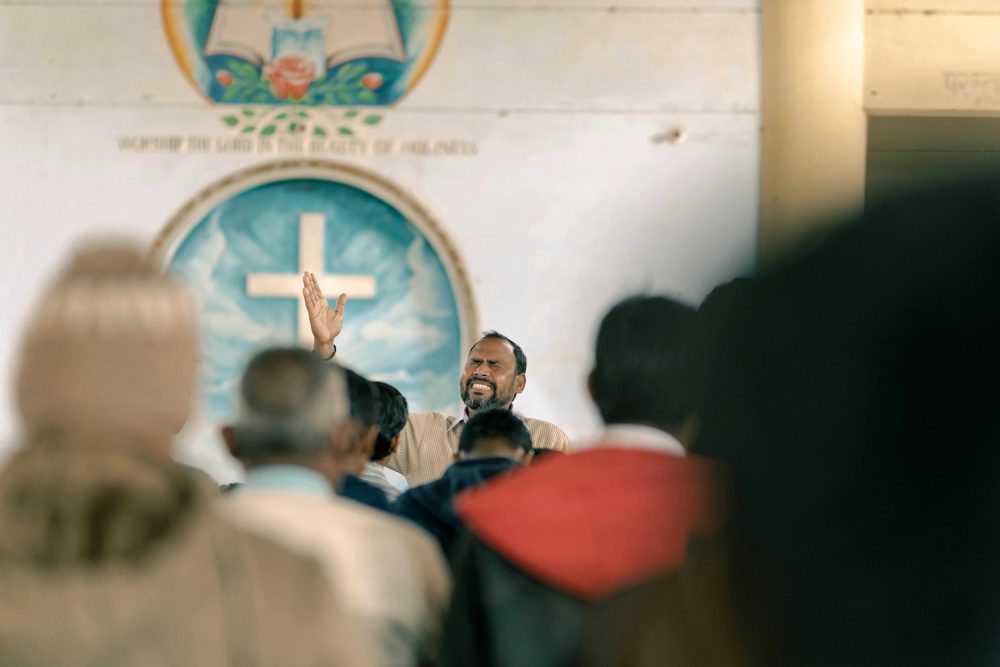
Easter is only a few weeks away, and churches everywhere are preparing for one of the most anticipated Sundays of the year. It’s the day when the church boldly declares the core teaching that God raised Jesus from the dead. Joyful parishioners will eagerly anticipate a message that affirms their belief in the resurrection.
But we’re fooling ourselves if we think that’s the only crowd we’ll speak to on Easter — or any Sunday for that matter.
On any given Sunday, and especially at Easter, you can bet that the pews contain both the faithful and the disillusioned, people who are living with a vibrant faith and people who are carrying real doubt. When crafting a sermon, let’s not forget the disillusioned and the doubters.
People may feel spiritually disillusioned because of the church’s institutional failures, past and present. Headlines that are filled with stories of war, political chaos and economic disparity may cause some people to wonder why they should bother with God or the church.
The wise preacher must choose carefully how to engage disillusioned people. Perhaps a good first step is to acknowledge that if the skeptic is sitting in the pew, they are still hanging around. They didn’t leave. Or they have returned, at least this Sunday. And they may be more inquisitive than critical. We don’t want to offer cheap grace that disengages a person’s intellectual curiosity. We also don’t want to align ourselves so closely with the skeptic that we don’t offer them any hope.
As we prepare to preach in spaces where doubt is present, it’s important to acknowledge the wounds people bring before we offer them hope. Make a distinction between the institutions we serve and the faith we proclaim. The church has much to repent for, but we can bear witness to God who is faithful despite our imperfections.
Resources

Why doubt is important for leaders
A newly elected councilmember in Campbell, California, discovered that politics was his vocation after family crises shook his faith.
By Sergio Lopez

Confusion and doubt are part of the spiritual journey
Our faith is sometimes better represented by the despair of Holy Saturday than the confidence of Easter Sunday, says a writer and Christ seeker.
By Jean Neely

Debunking the myth that faith and science are in conflict
Americans may think that most scientists are atheists or even adversaries of religion, but that’s not the case. And welcoming scientists and scientific ideas into our congregations could help our youth, says a researcher who has studied the issue.
Q&A with Elaine Howard Ecklund

Church has no walls but many doors, accessible to seekers and skeptics
One body with many parts, a Houston “church without walls” brings together house churches, a food truck, pub theology, a laundry ministry and more. Its priest isn’t trying to do something old in a new way – he’s trying to do something brand-new in the old way.
By Andrew Kragie
Before you go
There’s a young man in my congregation who keeps me on my toes. He has a brilliant, scientific mind, a deep faith and lots of questions. “Joe” (that’s not his real name) doesn’t want easy answers. He wants thoughtful engagement with Scripture and real life. Joe doesn’t want me to promise him that God has a perfect plan for his life because Joe is too concerned about the broken lives and unfulfilled dreams of his childhood friends. But he shows up week after week, bringing people with him. I sometimes think about Joe when I’m preparing my sermons. After 26 years, I know what to say to the people who know all the words to our favorite hymns. But I have to slow down and think about questions Joe might have when he hears the text. We all have people like Joe in our pews. This week, how will your sermon speak to them?
You can always reach me and the Alban Weekly team at alban@duke.edu. Until next week, keep leading!

Prince R. Rivers
Editor, Alban at Duke Divinity