

Bart Kerswell / Unsplash
Ministers learn the discipline of caution early. It’s understandable: Caution preserves what has been built. It keeps the peace and buys time when time is needed. But caution, left unchecked, can quietly become a cage. Let’s not forget that some of the most transformative moments in ministry have come not when leaders played it safe, but when they dared to take a risk for the sake of the gospel.
Leaders often pursue innovation with limited resources and no guarantee that things are going to go as planned. Consequently, risk is an inherent part of leadership, especially Christian leadership. Jesus invites everyone who follows him to accept a certain amount of risk-taking. He calls disciples to follow him knowing that “foxes have holes, and birds of the air have nests, but the Son of Man has nowhere to lay his head.” (Luke 9:58, NRSVUE) Therefore, discerning how and when to take a risk is an essential skill for congregational leaders.
Human beings are prone to minimize risk. Nobel Laureate Daniel Kahneman suggests that because we respond more strongly to losses than to comparable gains, we approach decision making with a bias toward loss aversion. By default, we choose the path that we perceive to be least risky.
When our leadership is constrained by the “paralysis of analysis,” we may be using caution to avoid taking a Spirit-led risk. The key is to remember that there are few sure things in ministry. However, the most fruitful seasons often begin not with careful calculation, but with a willingness to step into uncertainty and trust what cannot yet be seen.
Resources

My New Year’s resolution? Take more risks
In a world that is volatile, uncertain, chaotic and ambiguous, it’s important to keep learning. But that means taking risks.
By Chris Aho

Failure as faithfulness
The parable of the sower and modern-day design thinkers challenge us to take risks rather than fear failure, writes an associate director for Leadership Education at Duke Divinity’s Thriving Congregations Coordination Program.
By Sarah E. Forsyth
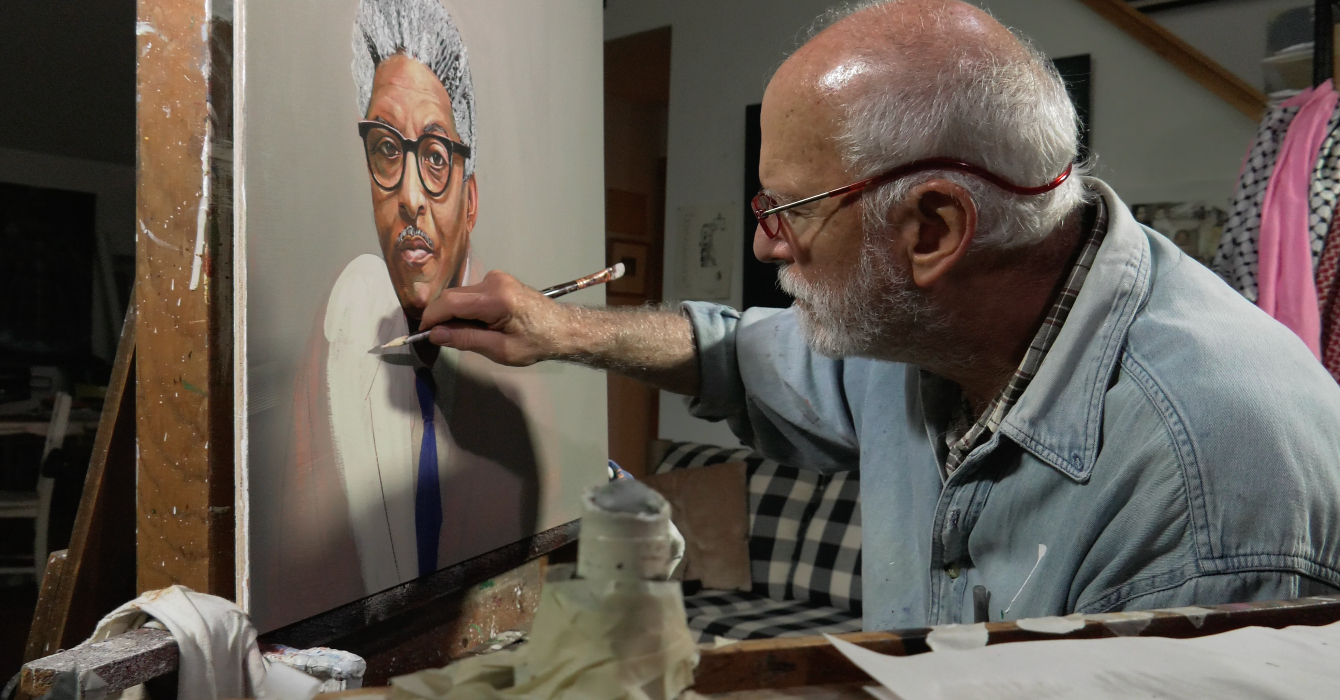
Honoring those who speak truth to power
Robert Shetterly creates portraits of people committed to telling the truth, and his work inspires conversation and discussion about Americans’ ethics, faith and social responsibility.
By Leslie Quander Wooldridge

10 guidelines for faithful innovation by a social entrepreneur
Innovation isn’t a good unto itself; at its core, innovation is about solving problems, says the co-founder of RootedGood. She shares the lessons she has learned as a social entrepreneur.
By Shannon Hopkins
Before you go
Among the best advice I’ve received in ministry is to not use my authority until I gain some. But as with most wise proverbs, there is an alternative point of view, and we must hold the two perspectives in tension. My mother liked to say, “He who hesitates is lost.” Should we wait or should we act? It depends. Caution is wise, but too much caution leads to missed opportunities.
Is it time for you to take a risk? How long will you wait before you address the issue that is keeping the church from moving forward? When will you preach about the topic that will make your congregation uncomfortable? Taking a risk is not easy. It requires courage. But leaders who avoid taking risks will find it difficult to see the results of faithfulness.
You can always reach me and the Alban Weekly team at alban@duke.edu. Until next week, keep leading!

Prince R. Rivers
Editor, Alban at Duke Divinity