
Phil Hearing / Unsplash
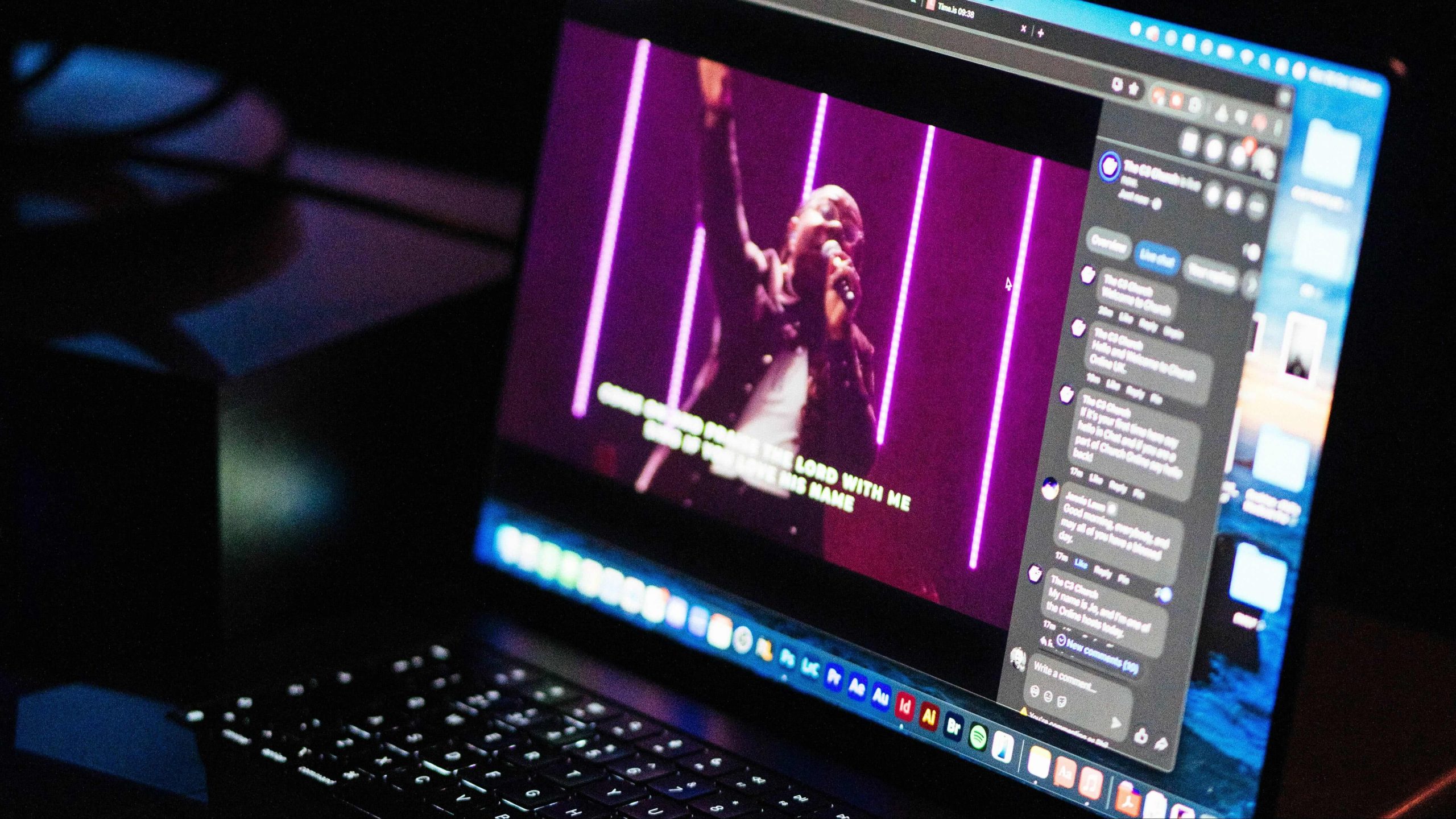
The Sunday morning preacher speaks to two congregations. One fills the pews, sings the songs, and shakes hands at the door. The other watches from a kitchen table, a hospital bed or a living room three states away. For much of church history, the preacher could look out and see everyone they were speaking to. That is no longer true, but most sermons haven’t caught up with that reality.
Hybrid worship is not a pandemic-era guest that overstayed its welcome. It is the new reality, and it demands that ministers and leaders think differently about presence, connection and exactly who is in the room (you can read more about virtual worship rates in the most recent Exploring the Pandemic Impact on Congregations study).
Larger churches were already leaning heavily into online worship before the pandemic. Today, we all need to reframe how we think about digital ministry. The people who gather in our virtual sanctuaries are not a lesser class of worshippers. For a variety of reasons, they are present in a different way.
Preachers need to understand that the sermon is no longer an event solely for people who gather in person. Now that they are often recorded and available in a digital archive, the sermon lives on beyond the preaching moment. Sermons are epistles, like Paul’s letters, that address the needs of a specific congregation but also circulate among multiple audiences. Preachers must consider theological questions, like what does community mean if the “body” is not gathered in the same space at the same time?
In addition to the theological questions, there are practical considerations as well. How and when should the preacher address online worshippers in the sermon? What follow-up is needed to help online worshippers stay engaged with the congregation?
If you’re preaching in 2026, you are preaching to two congregations. One you can see. One you can’t. The preacher who can speak to the hearts and minds of both is a more complete communicator.
Resources

From its earliest incarnations, the body of Christ has been a virtual body
Today’s digital networks have an ancient precedent: the apostle Paul led fledgling communities through letters — showing that even in its earliest days, the church was not dependent on physical presence.
By Deanna Thompson
What Zoom has taught us about in-person connection and stewardship of relationships
The expansion of virtual meeting options during the pandemic allowed us to continue our work and personal interactions more safely. Now, we need to rediscover the value of in-person gathering versus online efficiency.
By Victoria Atkinson White

Five years after the start of the COVID pandemic, here are three ways congregations continue to be affected
The emergence of COVID changed our lives. Professor and researcher Scott Thumma highlights how congregations have changed.
By Leslie Quander Wooldridge

What if preaching were an ongoing conversation?
Rather than a series of “one-offs,” sermons can spark a conversation that fosters communal spiritual continuity in the congregation. Here are seven strategies to do that.
By Elizabeth Felicetti and David J. Schlafer
Before you go
None of us was trained for this. Seminary prepared us to stand before a gathered congregation, read the room and respond in real time. The hybrid reality we are living in is still new territory for almost everyone in ministry. But here is what I know: preachers have always found ways to reach people where they are. The medium has changed, but the mission has not.
Someone may be watching or listening to your sermon from a hospital bed right now, desperate for a word that speaks to their fear. Someone else may be sitting in an airport lounge, isolated and struggling, and your voice through a screen may be the only pastoral presence they experience this week. This is a holy opportunity. Lean into it. Learn the craft of preaching to the unseen congregation.
Not everyone comes to church in person, but they still show up. They are present in the best way they know how. Let’s make sure they hear the good news.
You can always reach me and the Alban Weekly team at alban@duke.edu. Until next week, keep leading!

Prince R. Rivers
Editor, Alban at Duke Divinity