

Arisa Chattasa / Unsplash
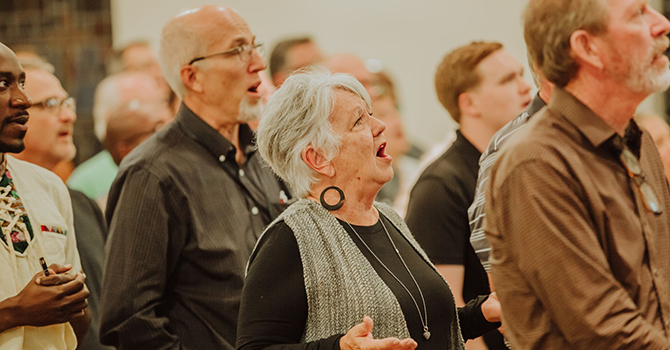
People often seem surprised by congregational conflict. But when was the last time you read the New Testament?
Take 1 Corinthians. The Corinthian community was divided over its loyalties to different leaders. Members disagreed about the authenticity of Paul’s apostleship. Interpersonal issues spilled over into the courts. Disciples held sharply different opinions about a variety of religious practices, including whether to eat food that had been sacrificed to idols.
Despite these competing agendas and divergent theologies, Paul attempted to cultivate koinonia and embody “the mind of Christ” (1 Corinthians 2:16b). When we realize that conflict is as inevitable in our churches today as it was in the Corinthian church, we must examine the ways we experience and manage it. Interpersonal conflict is a key factor in emotional exhaustion, which is one of the indicators of burnout.
Online assessments often highlight five conflict styles: competing, collaborating, compromising, avoiding and accommodating. Competitors focus on winning. Collaborators look for win-win outcomes. Compromisers look for trade-offs where everyone gives up a little. Avoiders withdraw and delay dealing with conflict. Accommodators want to keep the peace so badly they may hide resentment and dissatisfaction. It’s tempting to think there is an ideal style that works in every situation, but leaders need to use multiple styles. We may be able to use avoidance on trivial matters, for example, but for consequential issues, avoidance will make things worse: we will need to adopt another approach.
The bottom line is that congregations are never conflict-free — and if they are, that might not be a good thing, either. Check out this week’s resources so that when conflict arises, you will not just survive. You will thrive.
Resources

‘Embodied Reconciliation: Congregational Healing as Pastoral Care’
In this excerpt, a scholar asks, What are the tasks of pastoral care and leadership in the wake of conflict or tension within a community of faith?
By Leanna K. Fuller

How do you manage frustration?
With frustration rising, there are possibilities for containing the contagion and harnessing the energy generated for hope.
By David L. Odom
Conflict and Christian discipleship
n a time of intense polarization, both inside and outside the church, Christians are called not to run from conflict but to engage it, drawing upon ancient practices of the faith, says the president of The Colossian Forum.
Q&A with Michael Gulker

Conflict is healthy and can promote interfaith understanding
In an interfaith setting, resolving conflict as quickly as possible isn’t the goal. Rather, healthy conflict can be a spark that leads us to self-awareness, self-reflection and transformation, writes the director of North Carolina Central University’s Office of Spiritual Development and Dialogue.
By Gloria Winston-Harris
Before you go
Here’s the interesting thing about conflict: it’s not all bad.
If a congregation never has any conflict, it probably means people are withholding how they really think and feel. They say they’re fine but they’re not.
Conflict is not only inevitable, but can be healthy and helpful. In Acts 6, we read about a conflict regarding the daily distribution of food in the early church. The apostles responded with a collaborative style. They found a win-win solution by appointing seven disciples to ensure a more equitable process. In the end, the community was better off because of this change.
Conflict can be frustrating when you’re leading a church but try to remember that the Spirit might be moving through it.
You can always share your ideas or feedback with me and the Alban Weekly team at alban@duke.edu. Until next week, keep leading!

Prince R. Rivers
Editor, Alban at Duke Divinity