

Martin Adams / Unsplash
It’s tempting to think that most churches in America are large congregations. We drive past super-sized church buildings with sprawling parking lots on major roads and highways across the country. However, smaller congregations still make up most of the congregations in the United States. While more than half of churchgoers attend large churches, about 91% of American churches have a membership of less than 360, according to a 2021 National Congregations Study.
It’s not a secret that smaller congregations face critical headwinds, such as a decline in financial resources and membership partly due to shifts in populations and changes in young adult religious practices. But let’s not write off smaller churches too soon. These spiritual powerhouses are in a good position to play key roles in their communities, cultivate deeply formed disciples and serve as a community hub for social and civic activities.
Smaller churches have an incredible capacity to be intergenerational, almost out of necessity. They may not be able to afford a dedicated children’s minister, so they will often invite children and youth to read Scripture, sing, pray or support the liturgical life of the church in other ways. Instead of creating a separate worship service, this formation happens in the main worship service. Over time, these intentional practices can shape a resilient Christian imagination, while also cultivating important skills and wisdom for living.
Small churches in rural areas often have an abundance of land and underutilized buildings. They provide an ideal setting for community activities that meet needs beyond the congregation. Whether it’s for health screenings, tutoring programs, or exercise classes, a small church can partner with local organizations or tap into expertise within the church to extend its ministry far beyond its membership. As you think about this with other leaders, how might your congregation bear witness to the reign of God regardless of how many members currently belong to the church?
Resources

What do small churches do well?
Small churches aren’t just waiting to grow or to die but are vibrant and healthy places with particular gifts, writes the author of “The Gift of Small.”
Q&A with Allen T. Stanton

How a small congregation changed a larger one
After his church merged with a smaller, older congregation, a pastor discovered that — like the yeast that leavens the loaf — the addition of new members changed his work in wonderful ways.
By A. Trevor Sutton
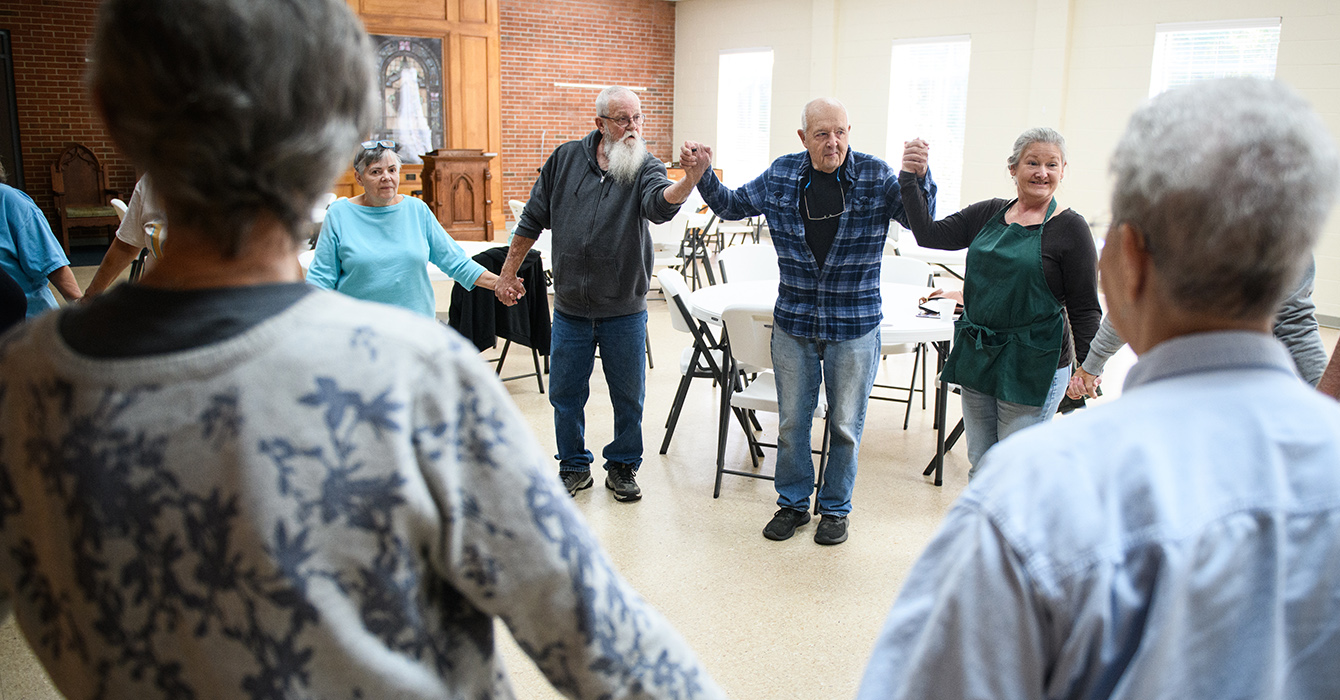
A food ministry in a tiny, rural town has helped hold a United Methodist church together across denominational divides
Volunteers from a small North Carolina church feed their neighbors each week with a hot meal and companionship in an outsize effort to the community.
By Yonat Shimron

With study, care and patience, a church makes a long-term commitment to help one family at a time
Partnered with other faith communities in their city, a small Virginia congregation has spent decades investing in families for the long haul.
By Edie Gross
Before you go
Small churches are living, breathing expressions of God’s kingdom at work in neighborhoods, towns and rural communities across America. Their size is not a liability but an invitation to lean into what large congregations often struggle to cultivate, which is intimacy, adaptability and deep rootedness in place. A congregation of 50 faithful people who pray together, serve their neighbors and form disciples across generations need not feel limited by its membership statistics. It should measure congregation’s faithfulness by the lives being transformed, the people being served and the good news being proclaimed.
Jesus does not evaluate our work based on the square footage of our buildings. He wants to know if you have been faithful over a few things (Matthew 25:23). Have you?
You can always reach me and the Alban Weekly team at alban@duke.edu. Until next week, keep leading!

Prince R. Rivers
Editor, Alban at Duke Divinity